


How do sweat bumps appear?
Sweat bumps generally correspond to a skin reaction when sweat cannot evacuate properly. When pores or sweat ducts become blocked, sweat can get trapped under the skin and cause small lesions to appear.
This phenomenon is also known as “heat rash” or miliaria. It is especially observed during hot and humid periods but can also appear during intense physical effort or when wearing overly covering clothing.
These bumps can take different forms: small redness, papules, tingling sensations, or small itches. They mainly appear in areas where sweating is heavy or where the skin lacks ventilation.

Why do sweat bumps appear on the body?
Sweating is a natural essential mechanism that allows your body to regulate its temperature. Sweating is not a problem: it’s when sweat stays in contact with the skin too long that imbalances can occur.
Several factors promote sweat bumps:
- High heat or a humid environment
- Tight clothing that prevents the skin from breathing
- Synthetic materials that trap sweat
- An accumulation of dead skin cells and impurities on the skin
- Products that are too rich and can clog pores
Repeated friction, especially on the shoulders, back, or neckline, can also weaken the skin and promote irritation.
How to avoid sweat bumps?
The secret to avoiding sweat bumps is maintaining good skin hygiene. The goal? Help the skin breathe, limit sweat buildup, and preserve your protective barrier.
Taking a shower after sweating
After sports activity or a hot day, clean your skin to remove sweat, impurities, and accumulated residues. Make sure to stop sweating before taking a shower!
It is best to use a gentle cleanser that respects your skin’s natural balance: indeed, overly harsh products can have the opposite effect by weakening the skin barrier and sometimes stimulating an excessive sebum production.
Also remember to thoroughly dry your skin after showering, especially in the folds and areas where sweat accumulates.
Choose suitable clothing
Clothing plays an important role in the appearance of sweat pimples. Clothes that are too tight can limit air circulation and increase friction.
Favor breathable materials like cotton or technical fabrics designed to wick away moisture during sports activities. In summer, loose clothing also helps limit constant contact between the skin and fabric. One key rule: skin ventilation!
Hydrate your skin with suitable care
Sweaty skin still needs hydration. Dehydrated skin can become more fragile and react more to external aggressions.
The ideal is to choose a light moisturizing care that nourishes the skin without leaving a heavy or greasy feeling.
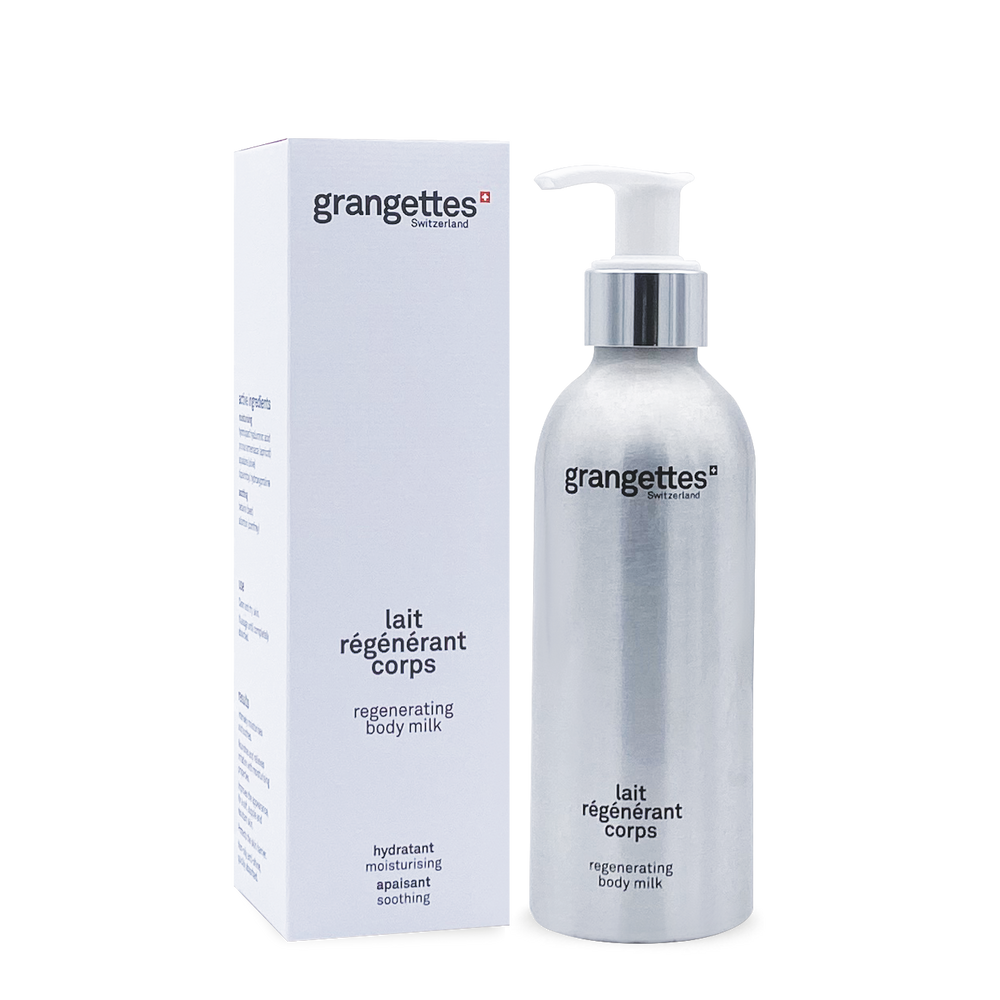
The lait régénérant corps Grangettes Switzerland is an excellent solution to keep your skin soft and comfortable while respecting its natural balance. Its fluid texture absorbs quickly and allows you to hydrate your body daily without a sticky effect. This body milk combines moisturizing ingredients such as hydrolyzed hyaluronic acid, prunus armeniaca (apricot), squalane (olive), and dipalmitoyl hydroxyproline for deep and lasting hydration.
- Regular price
- 40,20 €
- Regular price
- Sale price
- 40,20 €
- Unit price
- per
By strengthening the skin barrier, it helps the skin better defend itself against external aggressions such as heat, friction, or dryness.
How to apply it?
After showering, on still damp skin, this treatment becomes a true preventive step to maintain supple skin, soothed and more resilient.
Some natural tips against heat rash...
Some "natural tips" circulate widely to eliminate heat rash, but not all are relevant... It is essential to distinguish two things:
- Reduce sweating (which is not desirable as sweating is a normal and healthy mechanism);
- Prevent sweat, heat, and friction from irritating the skin and causing heat rash.

Aloe vera gel to soothe heated skin
Aloe vera is one of the most interesting natural solutions when the skin is irritated by heat or friction. Its richness in water and polysaccharides gives it hydrating and soothing properties.
After a hot day, a workout, or sun exposure, applying a thin layer of aloe vera gel to sensitive areas can provide a cooling sensation and reduce discomfort from redness or tingling.
Choose the purest possible aloe vera gel without fragrance to avoid further irritating already sensitive skin.
Cool cloth to calm discomfort sensations
When heat rash appears, the first reaction is often to want to use multiple products. However, a very simple action can already help: gently cool the affected area.
Apply a clean cloth soaked in cool water for a few minutes to reduce the sensation of heat and temporarily soothe the skin. This tip is especially pleasant after physical activity or during hot weather.
Be careful, however, to avoid ice cubes directly on the skin, as they can cause additional irritation!
Apple cider vinegar: a traditional tip to use with caution
Apple cider vinegar is sometimes recommended for its purifying properties due to its natural acidity. Some people use it diluted in water to clean areas prone to sweating.
However, this tip should be used with great caution: applied pure or too frequently, vinegar can disrupt the skin barrier and cause irritations, especially on sensitive skin.
If you want to use it, it is best to dilute it heavily and test first on a small area.
Baking soda: more for absorbing moisture than treating pimples
Baking soda is often presented as a natural anti-sweat remedy. It can indeed help absorb moisture, but it is not suitable for all skin types. Why? Because its alkaline pH can disrupt the skin’s natural balance and cause dryness or irritation when used regularly.
It is therefore better to favor gentle actions: keep the skin dry, wear breathable clothing, and use an appropriate moisturizing care.
4 mistakes to avoid when you have sweat pimples
Certain habits can worsen sweat-related pimples...
Avoid:
- Popping or scratching pimples, which increases the risk of irritation
- Using scrubs that are too harsh on already sensitized skin
- Applying very occlusive comedogenic cosmetics that prevent the skin from breathing
- Neglecting body hydration