


What is a stretch mark?
Stretch marks are marks that appear when the skin is stretched quickly and intensely. This tension causes a rupture of the fibers of collagen and elastin, essential for the skin's suppleness and strength.
At first, stretch marks are often red, purple, or pink: this is the inflammatory phase. Over time, they become white and less noticeable, but also more difficult to treat. Hence the importance of prevention!

Why do stretch marks appear?
Several factors promote the appearance of stretch marks:
- Weight fluctuations: rapid weight gain or loss stretches the skin;
- Pregnancy: the belly, breasts, and hips are particularly affected;
- Puberty: the body changes rapidly, sometimes abruptly;
- Hormonal factors: certain hormones weaken skin fibers;
- Genetic predisposition: some skin types are more prone to stretch marks than others.
Even if you cannot control all these factors, you can strengthen your skin to help it better resist these changes.
6 tips to prevent stretch marks
Tip #1: hydrate your skin daily
Hydration is the foundation of healthy skin. Well-hydrated skin is more supple, more elastic, and therefore more resistant to stretching.
To prevent stretch marks, apply a moisturizing body milk morning and evening on risk areas: belly, thighs, hips, breasts, and buttocks. Massage gently to promote absorption and stimulate circulation.
Choose products rich in moisturizing and nourishing actives, capable of maintaining the skin's balance.
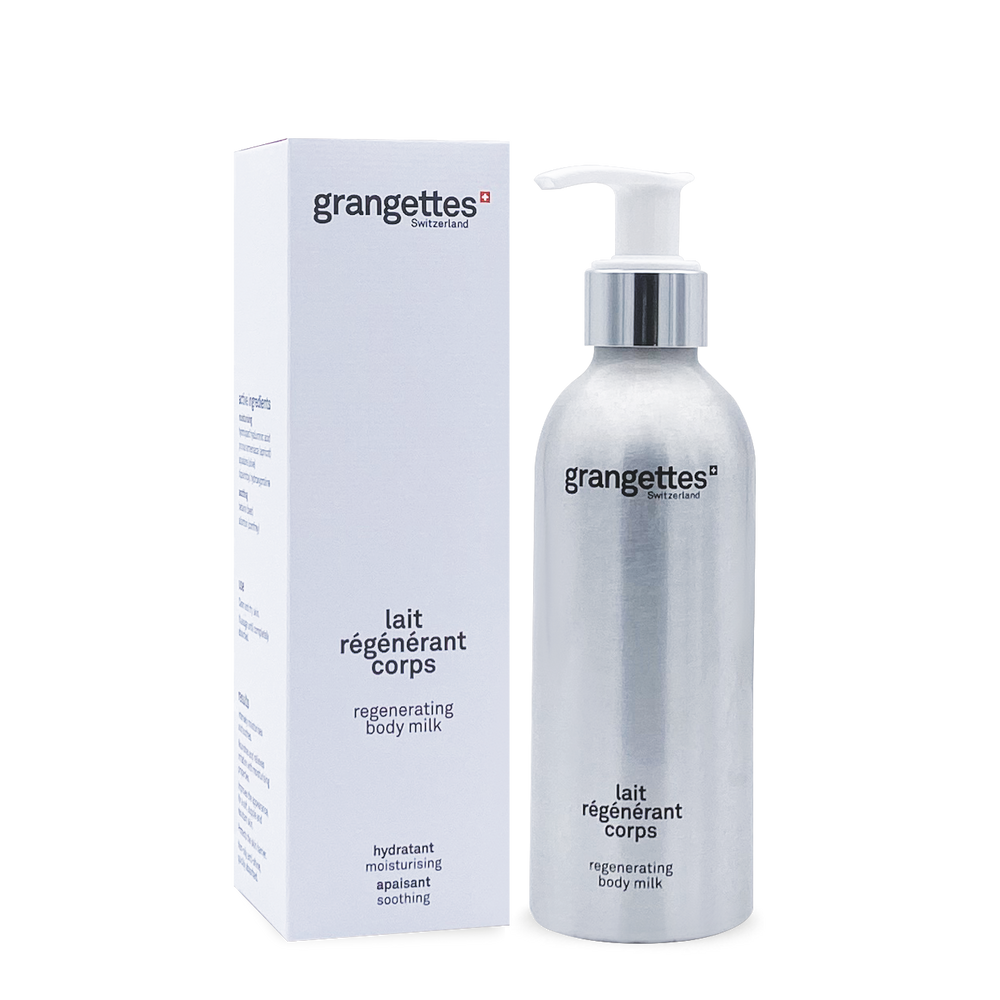
The Grangettes Switzerland regenerating body milk is designed with micro-fragmented hyaluronic acid: this ingredient maintains the skin's structure and regulates its hydration. Its molecules penetrate the skin more easily to act deeply by capturing and retaining water, thus improving the long-lasting hydration of tissues. Thanks to hyaluronic acid, the skin immediately appears more supple, plump, and comfortable. It is an ideal active ingredient to strengthen overall hydration and prevent dehydration!
- Regular price
- 40,20 €
- Regular price
- Sale price
- 40,20 €
- Unit price
- per
Tip #2: nourish the skin deeply
Beyond body hydration, skin nutrition is essential. Lipids help strengthen the skin barrier and improve skin suppleness.
Vegetable oils (such as sweet almond, argan, or rosehip oil) are particularly beneficial. They provide comfort and elasticity while leaving a protective film on the skin.

Tip #3: adopt massage to prevent stretch marks
Massage is a valuable ally in preventing stretch marks. Besides helping products penetrate, it stimulates blood circulation and improves skin tone.
Pinch and roll massage
Gently pinch a fold of skin between your thumb and fingers, then "roll" it between your hands. This massage stimulates circulation and helps soften tissues: it is ideal on thighs, belly, or hips.
Circular movements
Apply your treatment to the area, then massage in large firm but gentle circles. This gesture promotes the penetration of active ingredients and improves skin elasticity.
Stretching massage
Place your hands flat and gently stretch the skin outward, without pulling too hard. This helps the skin gain suppleness and supports areas under tension (belly, breasts).
Light pressure massage
With your fingertips, apply small rhythmic pressures on the skin. This gesture activates microcirculation and stimulates skin regeneration.
Tip #4: watch your diet
The beauty of the skin also comes from the plate. By adopting a balanced diet, you can maintain the quality of skin fibers.
What to eat for beautiful skin? Focus on:
- Foods rich in vitamin C (blackcurrants, citrus fruits, parsley, peppers) for collagen production;
- Essential fatty acids (fatty fish, vegetable oils) for suppleness;
- Proteins for the skin’s structure.
Don’t forget to drink enough water (1.5 l per day) to maintain good overall hydration.
Tip #5: pay special attention during pregnancy
Pregnancy is a risk period for the appearance of stretch marks. The tip? Make sure to adopt a suitable routine from the first months.
Apply the Grangettes regenerating body lotion regularly and focus on sensitive areas. Consistency is key to supporting the skin through its transformations.
- Regular price
- 40,20 €
- Regular price
- Sale price
- 40,20 €
- Unit price
- per
Once a week, also exfoliate. It removes your epidermis of its impurities, and optimizes the penetration of the moisturizing active ingredients in the body lotion you will then apply to the skin.
Tip #6: choose suitable clothing
Clothes that are too tight can increase friction and weaken the skin. Favor soft and comfortable fabrics that respect your skin, such as cotton or linen.
Mistakes to avoid to truly prevent stretch marks
Some mistakes can promote the appearance of stretch marks:
- Neglecting hydration;
- Applying treatments irregularly;
- Ignoring the specific needs of your skin;
- Thinking it is too late to take action;
- Using unsuitable products or those with too harsh a composition.
To be sure to choose products with impeccable composition, you can rely on cosmetic analysis apps. At Grangettes Switzerland, we are proud to achieve excellent results on the vast majority of apps such as Yuka, INCI Beauty, and Clean Beauty, on the international app EWG Skin Deep, as well as with the Swiss FRC (Fédération Romande des Consommateurs).
Can stretch marks really be avoided?
There is no miracle solution guaranteeing 100% prevention of stretch marks. Genetics and hormones also play an important role. However, by adopting the right habits, you can significantly reduce the risk of their appearance and improve your skin’s appearance.
What to do if they appear anyway?
If stretch marks appear, it is important to act quickly, especially when they are still red. This is when they are most receptive to treatment.
Keep hydrating, nourishing, and massaging your skin, focusing on the most effective ingredients to reduce stretch marks:
1) Hyaluronic acid
It intensely hydrates the skin by retaining water in the tissues. Well-hydrated skin is more supple and more resistant to stretching.
2) Centella asiatica
Known to stimulate collagen production, it helps strengthen the skin’s structure and improve its elasticity.
3) Vegetable oils (sweet almond, argan, rosehip)
Rich in essential fatty acids, they deeply nourish the skin and improve its suppleness.
4) Peptides
Peptides support the production of collagen and elastin, two key proteins for firm and resilient skin.
5) Vitamin E
Vitamin E is an antioxidant; it protects the skin from oxidative stress and aids in its repair.
6) Shea butter
Very nourishing, it helps restore the hydrolipidic film and maintain soft, flexible skin.
Towards more supple and resilient skin
Preventing stretch marks is above all about taking care of your skin daily. Hydration, nutrition, massage, balanced diet… these simple actions strengthen your skin and support its transformations.
Remember: the key lies in consistency. By adopting a suitable routine, you give your skin every chance to stay supple, comfortable, and resilient against life's changes!