


Why do we get dry elbows?
Dry skin is characterized by a decrease in the water content of the skin's superficial layer and a more or less significant impairment of its barrier function.
The elbows are particularly affected by this problem. They regularly experience friction and pressure, especially when resting on a table or hard surface: the skin can then become thicker and more rough.
Several factors can also contribute to dry elbows:
- Cold and dry air;
- Very hot showers or baths;
- Frequent washing;
- Using overly harsh cleansing products;
- Repeated friction;
- An insufficient moisturizing routine;
- Certain dermatological conditions can cause dryness or flaking.
When your skin lacks lipids and water, it gradually loses its suppleness. It may then cause a feeling of tightness and feel rough to the touch.
How can you recognize very dry elbows?
Dry elbows can have several appearances...
- The skin may simply feel rougher than the rest of the body;
- It may also be whitish and have small scales
- It may appear thickened.
In some cases, dryness is accompanied by itching, redness, or small cracks.
But be careful: it is important to distinguish simple dry skin from a dermatological problem. If the patches on your elbows persist, are very red, thick, painful, very scaly, or also appear on other areas of the body, medical or dermatological advice may be necessary.

Which product should you choose for dry elbows?
The choice of treatment to use depends mainly on the condition of your skin.
For dry but not very rough elbows, a moisturizing cream or body lotion used daily may be sufficient. The aim is to provide water to the skin's superficial layer and reduce dehydration.
For particularly rough elbows, you can look for formulas containing vegetable glycerin, urea, or lipids such as ceramides and certain fatty acids, which help maintain the skin barrier function.
Glycerin to moisturize the skin
Vegetable glycerin is a humectant commonly used in moisturizing products. It helps retain water in the skin's surface layer. A treatment containing glycerin can therefore be particularly useful for daily use on dry areas of the body.
Urea for very rough elbows
When the elbows are not only dry but also thick and rough, urea may be beneficial.
At low concentrations, it primarily has a moisturizing function. At higher concentrations, it also helps soften the horny layer and may help reduce the very rough appearance of certain areas.
For simply dry skin, however, it is not necessary to systematically seek the highest concentration.
Lipid-replenishing agents to enhance skin comfort
Body care products may also contain various emollient and lipid-replenishing agents. Their role is notably to soften the skin and help limit water loss.
For particularly dry elbows, a richer texture may be preferable to a very lightweight treatment, especially in the evening.
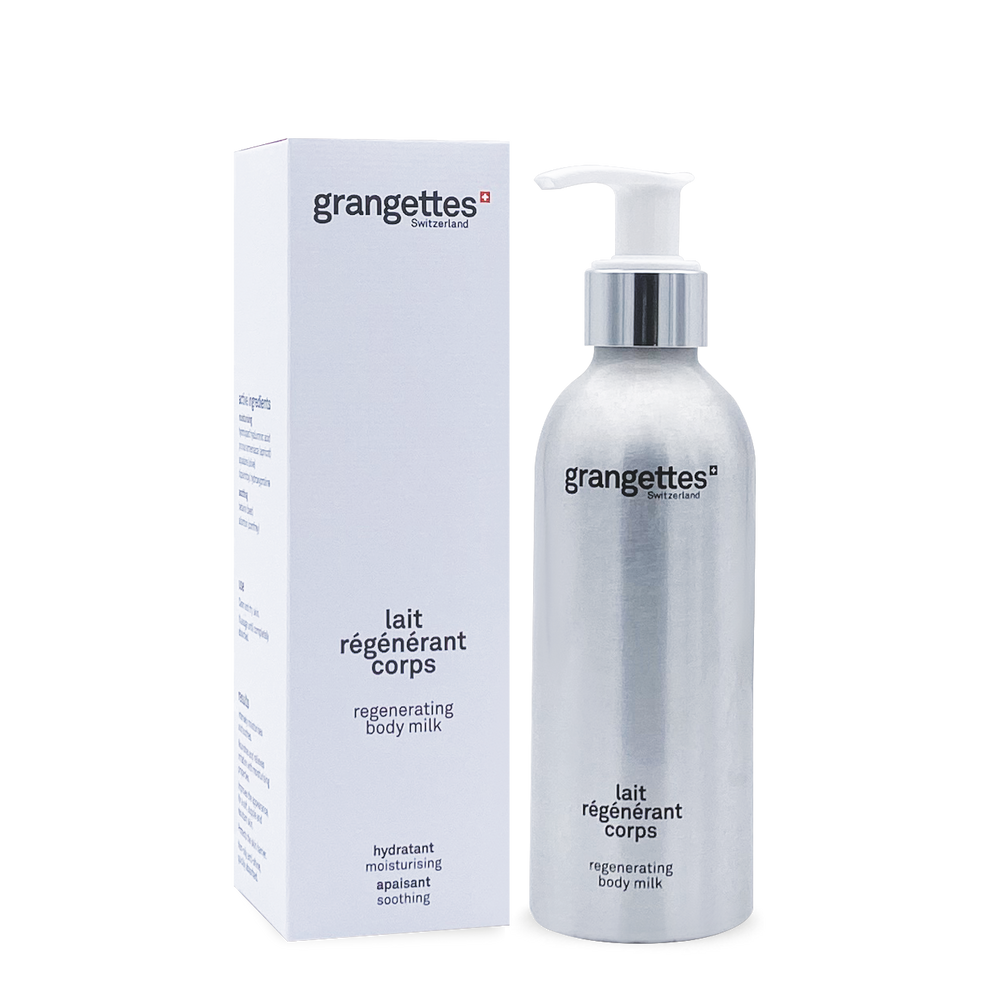
Grangettes regenerating body milk: a solution for dry areas
The Grangettes regenerating body milk can have a place in a routine intended for dry and dehydrated skin.
Its milk-like texture allows application all over the body, but there is nothing to prevent using it more selectively on areas that tend to dry out, such as the elbows, knees, or legs.
The product notably combines ingredients intended to provide comfort and care for the skin, such as hyaluronic acid, vegetable glycerin, and squalane.
- Regular price
- 40,20 €
- Regular price
- Sale price
- 40,20 €
- Unit price
- per
For the elbows, the process is simple: apply a small amount of product after showering, then massage until absorbed. If the skin is particularly dry, an additional application in the evening, just before going to bed, can make a real difference!
The key is really to be consistent in using the treatment. An occasional application when the elbows are already very dry is obviously less effective than a daily routine.
How should you apply your care product to your elbows?
How the product is used matters almost as much as the choice of product.
After showering, dry the skin without rubbing it vigorously. Then apply your moisturizer to the elbows while they are still comfortable and slightly dry. Massage gently until absorbed, focusing on the rough areas.
If the elbows are very dry, applying it morning and evening may be considered for a few days or weeks, then adjusted according to the condition of the skin.
It is also best to avoid excessively hot showers and choose a gentle, fragrance-free cleanser. Certain detergents, such as Sodium Lauryl Sulfate (SLS), as well as alcohol or fragrances, can be irritating and increase discomfort in already dry skin.

Should you exfoliate dry elbows?
Scrub Intensively scrubbing dry elbows is not necessarily a good solution.
Exfoliating too often or too aggressively can irritate your already sensitive skin and increase discomfort. If your elbows are simply dry, regular moisturizing is the best approach.
A simple routine for softer elbows
To care for your dry elbows, there is no need to use multiple products.
A simple routine may be enough:
1. Cleanse gently: avoid very hot water and particularly harsh cleansers;
2. Moisturize daily: apply a body lotion or cream after showering;
3. Focus on dry areas: you can apply a little extra product to the elbows;
4. Adapt your care routine to the roughness : sIf the skin remains very thick and rough despite regular moisturizing, a product containing urea may be considered;
5. Avoid excessive friction: harsh scrubs and repeated rubbing can prolong irritation.
When should you consult a professional about dry elbows?
Occasional dryness is generally harmless. However, it is preferable to seek advice from a healthcare professional when symptoms persist despite an appropriate routine or when the elbows have thick, red, painful, cracked, or very scaly patches.
Certain dermatological conditions, particularly psoriasis, can affect the elbows and require specific care. In this case, applying only a moisturizing lotion does not treat the underlying cause.