


What is a microcurrent?
A microcurrent is a very low-intensity electrical stimulation, generally expressed in microamperes. It is applied through the skin using electrodes.
This technology belongs to the broader family of electrical stimulation, but it should not be confused with all forms of electrical stimulation. The parameters used (intensity, frequency, waveform, duration, and polarity) can significantly alter the biological effects observed.
Microcurrent devices intended for the face are generally designed for cosmetic, non-invasive use.
The term “microcurrent” therefore primarily describes an electrical characteristic of the treatment, rather than an aesthetic result in itself.
How do microcurrents affect the skin?
This is probably the most interesting part, but also the one where we need to be wary of promises that sound too good to be true.
Cells naturally produce weak electrical signals that contribute to their functioning. When tissue is damaged, electrical changes also occur in the affected area. Researchers have therefore been studying for several years how external electrical stimulation can affect cells.
Laboratory studies on fibroblasts, the cells that are involved in the production of collagen, show that certain microcurrents can influence their activity. In particular, they may promote their multiplication and migration, two processes involved in tissue repair.
But caution is needed: these results were obtained in cells in the laboratory. On their own, they do not establish that a microcurrent device used on the face increases collagen or makes wrinkles disappear.
The research is therefore interesting, but it is important to distinguish what has been observed in the laboratory from what has actually been demonstrated in humans.
What are the benefits of microcurrents for the face?
The best-documented benefits mainly concern parameters related to the appearance of the skin and tissue tone, but the studies remain relatively limited in number.
A review published in 2024 analyzed the clinical research available on various at-home beauty devices using, among other technologies, microcurrents, radiofrequency, and LEDs. Of the 18 studies included, several reported improvements in parameters related to skin aging, but the authors also highlighted the methodological limitations and the heterogeneity of the devices studied.
It is therefore necessary to distinguish between several potential effects...
An improvement in the appearance of the skin
Some studies on devices combining several technologies observed improvements in hydration, elasticity, roughness, or certain wrinkle parameters after several weeks of use.
However, when several technologies are used simultaneously (for example, microcurrent, radiofrequency, light, and ultrasound), it is impossible to attribute the result precisely to microcurrent alone.
This is an important limitation of the studies currently available.
A possible effect on firmness and tone
Studies using forms of neuromuscular electrical stimulation have reported improvements in wrinkles and facial sagging. However, neuromuscular stimulation is not strictly equivalent to conventional cosmetic microcurrent.
A controlled study published in 2024 compared, in 24 women, one side of the face treated with high-frequency neuromuscular stimulation with the other side serving as a comparison, over eight weeks. The treated side showed improvements in certain parameters related to elasticity, wrinkles, facial contour, and blood flow. Caution: the results concern a specific neuromuscular stimulation technology and cannot be directly generalized to all microcurrent devices.
Microcurrents and wrinkles: what can you really expect?
Microcurrents are often presented as an anti-wrinkle solution. However, the available data do not allow this claim to be considered equivalent to that of a dermatological treatment supported by numerous clinical studies.
Some research does report improvements in wrinkle-related parameters with electrical devices or devices combining several technologies.
On the other hand, it is much more difficult to claim that microcurrents alone cause a sufficiently significant increase in collagen to “rebuild” the skin.

Why is consistency important?
As with many cosmetic devices, the potential effects of microcurrents should not be viewed as a permanent transformation achieved after a single session.
The protocols studied generally rely on repeated use over several weeks. The 2024 review of at-home beauty devices also shows that clinical studies frequently assess results after several weeks of use.
Consistency is therefore important if you want to properly assess the value of a device.
You should also follow the manufacturer's instructions precisely: intensity, frequency of use, session duration, and application areas are not always the same from one device to another.
Microcurrents: what precautions should you take?
Microcurrents are generally non-invasive, but “non-invasive” does not mean that no precautions are necessary.
Some electrical stimulation devices can cause adverse effects such as irritation, pain, burns, or other reactions when they are poorly designed or incorrectly used. It is also important to note the risk of interference with certain implanted devices, particularly pacemakers and defibrillators.
Make sure you carefully follow the instructions for the device you use and observe its specific contraindications.
Therefore, if your skin has significant irritation, a lesion, or inflammation, do not treat it without first verifying that use of the device is appropriate.
So, are microcurrents effective?
Although there are encouraging results, the evidence remains limited when it comes to attributing all the anti-aging benefits claimed for microcurrents to microcurrent alone.
Biological research shows that weak electrical currents can influence certain cellular behaviors, particularly in fibroblasts (which, as a reminder, are cells involved in the production of collagen).
Clinical studies on electrical stimulation devices also report improvements in certain aesthetic parameters. However, the technologies studied are sometimes different or combined, and the sample sizes often remain small.
Microcurrents can therefore be considered an interesting, non-invasive cosmetic technology, but it would be premature to present them as a method capable, on its own, of deeply “regenerating” the skin or replacing dermatological treatments.
Ultimately, the most interesting approach may not be to attribute spectacular powers to them, but to understand what they really are: a low-intensity electrical stimulation whose biological effects are being studied, with promising clinical results that are still insufficient to confirm all the market's anti-aging claims.

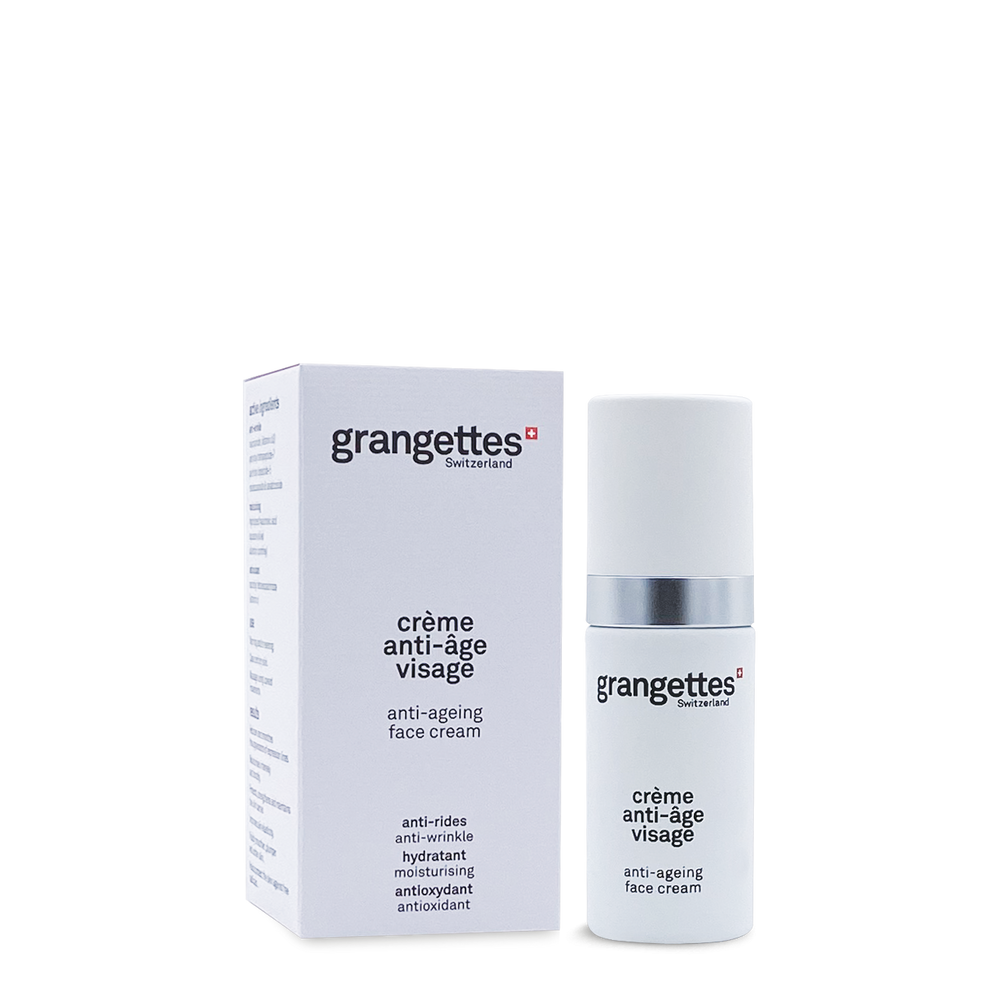
Grangettes Switzerland anti-aging cream
If you want to address the signs of skin aging every day, microcurrents can also be incorporated into a suitable skincare routine. The Grangettes anti-aging cream Switzerland is therefore an interesting complement for caring for mature skin or skin showing the first signs of aging.
Its formula combines active ingredients that help preserve the appearance, suppleness, and softness of the skin. Used regularly, it fits easily into a complete anti-aging routine, alongside good hydration and daily sun protection.
- Regular price
- 42,50 €
- Regular price
- Sale price
- 42,50 €
- Unit price
- per