


Sugar: a quiet foe of the skin
A square of chocolate, a pastry at breakfast, a soft drink at the end of the day… and the next morning, a spot appears... Coincidence? Not really! For several years now, sugar has increasingly been blamed for skin problems.
When we talk about sugar, we naturally think of sweets, pastries, or soft drinks. But sugar is not limited to sweet taste. It also includes refined carbohydrates such as white bread, factory-made pasta, or even ultra-processed meals. These foods have a high glycemic index, meaning they cause a rapid rise in blood sugar levels.
This sudden rise in blood sugar leads to a large release of insulin. However, insulin does not only act on blood sugar regulation: it also influences the hormones involved in sebum production. This is where the link between sugar and spots begins to take shape...
Insulin, hormones, and excess sebum
When insulin rises, it indirectly stimulates the production of androgens, hormones that encourage the activity of the oil glands. The result: the skin produces more sebum. Now, an excess of sebum can clog pores, encourage the growth of bacteria, and cause the appearance of blackheads, inflamed spots, and even cysts!
The role of inflammation
Sugar is also involved in inflammatory processes. A diet rich in quick sugars promotes a low-grade chronic inflammation in the body. Acne is an inflammatory skin disease. This internal inflammation can show on the outside as more reactive skin, red, painful, and persistent spots.
But that’s not all... Sugar contributes to a process called glycation: it binds to proteins like collagen and elastin, altering their structure. Over time, this can weaken your skin, slow the healing of spots, and deepen post-acne marks.

Are all sugars equal when it comes to spots?
Good news: not all sugars are the same. Natural sugars found in fruits, combined with fibres, vitamins, and antioxidants, do not have the same effect as refined sugars. Fibres slow down sugar absorption and limit blood sugar spikes.
On the other hand, ultra-processed products often combine several harmful factors for the skin: sugar, bad fats, additives, and low nutritional value. These are the ones that cause the most problems for acne-prone skin!
Why are some people more sensitive than others?
Not all skins react the same way to sugar. Several factors come into play:
- Genetics;
- Hormonal balance;
- Stress;
- The quality of the gut flora;
- Sleep.
Some people can consume sugar without visible consequences, while others will see spots appear after a few excesses.
Stress, in particular, increases sugar’s impact on the skin. It raises cortisol, a hormone that promotes inflammation and sebum production. A sugary diet combined with chronic stress thus creates a particularly favourable ground for blemishes.
How to avoid spots linked to sugar?
Completely avoiding sugar is neither realistic nor desirable. The goal is not deprivation but balance. So, what to eat for beautiful skin?
Foods to favour for clearer skin
Foods with a low or moderate glycemic index help avoid insulin spikes responsible for excess sebum. They also support hormonal and inflammatory balance:
-
Green and colourful vegetables: broccoli, courgette, spinach, carrots, peppers. Rich in fibres and antioxidants, they regulate blood sugar and support the skin’s natural detoxification;
-
Whole fruits (in moderation): apples, pears, berries, citrus fruits. Their fibres slow sugar absorption and limit the impact on the skin;
-
Whole grains: brown rice, quinoa, rolled oats, whole sourdough bread. They stabilize energy and prevent sweet cravings;
-
Legumes: lentils, chickpeas, kidney beans. Excellent for blood sugar and gut flora;
-
Good fats: avocado, olive oil, nuts, chia or flax seeds. They have an anti-inflammatory effect beneficial for blemish-prone skin;
-
Quality proteins: eggs, fish, poultry, tofu, tempeh. They slow carbohydrate absorption and support skin repair;
-
Fermented foods: plain yogurt, kefir, raw sauerkraut, miso. They strengthen the gut flora, often linked to skin health.
Foods to limit in case of spots
These foods cause rapid blood sugar spikes, stimulate insulin, and promote inflammation, which can lead to acne flare-ups:
-
Refined sugars: sweets, pastries, factory-made biscuits, chocolate bars;
-
Sweetened drinks: soft drinks, factory-made fruit juices, energy drinks;
-
Ultra-processed products: ready meals, salty snacks, very sweet breakfast cereals;
-
White flours: white bread, white pasta, pastries;
-
Sweet dairy desserts: flavoured yogurts, dessert creams, factory-made flans;
-
Frequent sweet snacking: nibbling throughout the day, which keeps insulin levels high.
The importance of the gut flora
More and more research highlights the link between the gut and the skin, often called the gut-skin axis. A diet too rich in sugar can upset the gut flora, encourage certain pro-inflammatory bacteria, and weaken the gut barrier. This imbalance can result in skin inflammations, including acne.
To support the gut flora, it is recommended to increase the intake of fibres, fermented vegetables, and foods rich in probiotics, while limiting refined sugar excesses.

Can we still enjoy ourselves?
Yes, absolutely! Frustration is often counterproductive and can lead to binge eating. The idea is to adopt a mindful approach: enjoy sugar occasionally, without guilt, while observing your skin’s reactions. You can keep a small food diary to help identify your personal trigger foods.
Choosing homemade desserts, less sweet and richer in nutrients, is also a good alternative. Food pleasure is part of overall balance, and stress related to eating can be just as harmful to the skin as sugar itself!
Which cream to use to limit inflammations on your face?
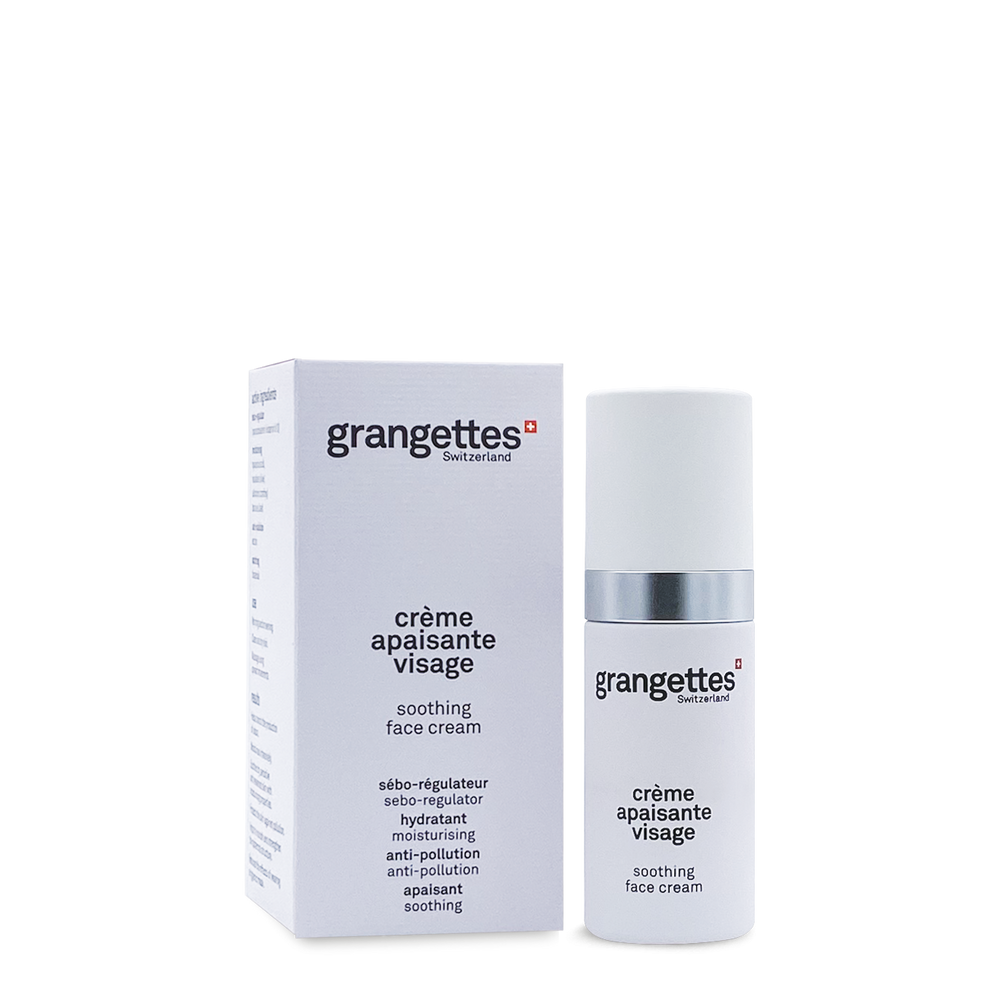
If your skin is prone to blemishes, adopt a beauty routine that includes a face cream made of ingredients that limit inflammations. The Grangettes Switzerland soothing face cream contains vitamin B12, an ingredient that regulates sebum and balances the skin.
Moreover, thanks to hyaluronic acid, olive squalane, allantoin, and betaine, it deeply moisturizes for softer and more supple skin. This cream offers anti-pollution protection thanks to ectoine and soothes sensitive skin with bisabolol. To limit spots on the face, it is therefore essential!
- Regular price
- 40,20 €
- Regular price
- Sale price
- 40,20 €
- Unit price
- per